Morphological and molecular identification of Culicoides species in bovine farms of the western region of Cuba
Article Sidebar
Main Article Content
Abstract
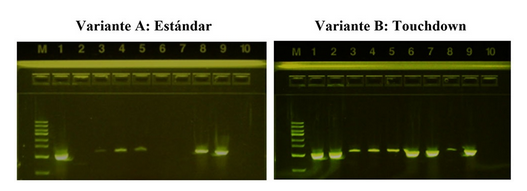
The present study aimed to identify species of the genus Culicoides in bovine farms of the western region of Cuba. The research involved capturing specimens in selected farms, morphologically classifying them through taxonomic keys based on wing spot patterns, and confirming species identity by polymerase chain reaction (PCR) for the amplification of the gene encoding Cytochrome Oxidase subunit I (COI). Two species of Culicoides (C. insignis and C. hoffmani) were morphologically and molecularly identified in bovine farms located in Havana and Mayabeque, constituting the first documented report in these productive environments of Cuba. The application of a dichotomous key of the wing pattern allowed precise morphological identification, while the PCR technique using universal primers for the COI gene proved to be an efficient complementary tool, especially under optimized conditions (Touchdown variant). This work constitutes a pioneering contribution in Cuba by integrating molecular tools into studies of Culicoides associated with livestock farming and by reinforcing the need for entomological and virological surveillance in bovine production systems as well as the design of vector-borne disease control strategies.
Article Details

This work is licensed under a Creative Commons Attribution-NonCommercial 4.0 International License.
National Center for Animal and Plant Health (CENSA)References
Meiswinkel R, Elbers, AR. The dying of the light: crepuscular activity in Culicoides and impact on light trap efficacy at temperate latitudes. Medical and Veterinary Entomology. 2016; 30: 53-63.
Kessinger P, James AM, Magzamen S, et al. Habitat suitability analysis for Culicoides species implicated in bluetongue virus transmission in the Southeastern United States. Med Vet Entomol. 2024;38(4):e12786. doi: http://doi.org/10.1111/mve.12786.
Hunter P. Climate change and waterborne and vector-borne disease. J Appl Microbiol. 2003; 94: 37-46.
Maclachlan NJ, Mayo CE. Potential strategies for control of bluetongue, a globally emerging,Culicoides-transmitted viral disease of ruminant livestock and wildlife. Antivir. Res. 2013; 99:79-90.
Al-Malki ES. The impacts of climate change on the global range of Culicoides punctatus with notes on its status in Saudi Arabia. PeerJ. 2025;13:e18916. doi: http://doi.org/10.7717/peerj.18916.
Catania AM, Grego E, Tomassone L, et al. Silent circulation of Bluetongue and Schmallenberg viruses in Culicoides biting midges in northwestern Italy: implications for the 2024 BTV outbreak. J Med Entomol. 2025;62(6):1582-9. doi: http://doi.org/10.1093/jme/tjaf128.
García I. Insectos hematófagos de Cuba. Poeyana.1976; 154: 1-20.
Wirth WW, FS Blanton. Biting midges of the genus Culicoides from Panama (Diptera, Heleidae). Proc. U.S. Nat. Mus. 1959; (3415),109:237-482.
Wirth WW, Blanton FS. Studies in Panama Culicoides (Diptera, Heleidae) III. A new species related to phlebotomus (Williston). Entomological News. 1953; 64: 113-120.
Fox I. A review of the species of biting midges of Culicoides from the Caribbean Region (Diptera: Ceratopogonidae). Ann. Ent. Soc. Amer. 1946; 39: 248-258.
Lutz A. Contribuicao para 0 estudo das Ceratopogoninas hematofagas do Brasil. Mem. Inst. Oswaldo Cruz. 1913; 5: 45-73.
Spinelli GR, Ronderos MM, Díaz F, Marino P. The bloodsucking biting midges of Argentina (Diptera: Ceratopogonidae). Memorias do Instituto Oswaldo Cruz. 2005; 100: 137-150.
Borkent A, Spinelli GR. Biodiversidad Acuática en América Latina. Neotropical Ceratopogonidae (Diptera: Insecta). 2007; 4: 1-200.
Stephan A, Clausen PH, Bauer B, Steuber S. PCR identification of Culicoides dewulfi midges (Diptera: Ceratopogonidae), potential vectors of bluetongue in Germany. Parasitology Research. 2009; 105:367-371.
Zhang S, Chen Z, Xiao L, Wang J. Development of a nested PCR assay-based molecular identification and genetic analysis of common Culicoides species in Fujian Province. Chin J Parasitol Parasit Dis. 2025;43(3):403-8. doi: http://doi.org/10.12140/j.issn.1000-7423.2025.03.015.
Mosquera JD, Zapata S, Augot D. Culicoides insignis in Ecuador: Molecular identification of blood meals and detection of bluetongue virus. Curr Res Parasitol Vector Borne Dis. 2025;8:100288. doi: http://doi.org/10.1016/j.crpvbd.2025.100288.
Acevedo AM, Postic L, Curiel M, Gondard M, Bréard E et.al. Detection, Characterization and Sequencing of BTV Serotypes Circulating in Cuba in 2022. Viruses. 2024; 16: 164. doi: https://doi.org/10.3390/v16010164.
Perruolo G. Clave de las especies de Culicoides (Diptera: Ceratopogonidae) asociadas con la ganadería en la región neotropical. Rev Cient FCV-LUZ. 2009;19(2):124-33.
Simon CF, Frati A, Beckenbach B, Crespi H, Lui, P Flook. Evolution, weighing and phylogenetic unity of mitochondrial gene sequences and a compilation of conserved polymerase chain reaction primers. Ann. Entomol. Soc. Am. 1994; 87: 651-701.
Dähn O, Werner D, Mathieu B, Kampen H. Large Scale Cytochrome C Oxidase Subunit I Gene Data Analysis for the Development of a Multiplex PCR Test Capable of Identifying Biting Midge Vector Species and Haplotypes (Diptera: Ceratopogonidae of the Culicoides Subgenus Avaritia Fox, 1955. Genes. 2024; 15(3):323. doi: http://doi.org/10.3390/genes15030323.
Sena da Silva SL, Sena do Nascimento BL, da Silva FS, Damous Díaz D, Da Silva, LH, et al. Diversity and molecular identification of Culicoides Latreille 1809 in a mining complex in the southeastern region of the Brazilian Amazon. Acta Tropica. 2026; 278:108060. doi: http://doi.org/10.1016/j.actatropica.2026.108060).
Hebert PDN, Cywinska A, Ball y De Waard JR. Biological identifications through DNA barcodes. Proceedings. Biological sciences / The Royal Society. 2003;270: 313-21.
Ander M, Troell K, Chirico J. Barcoding of biting midges in the genus Culicoides: a tool for species determination. Medical and Veterinary Entomology. 2012; 27(3): 323-331.
Jin T, Husseneder C, Foil L. Assigning Culicoides larvae to species using DNA barcoding of adult females and phylogenetic associations. Parasit Vectors. 2022;15:349. doi: http://doi.org/10.1186/s13071-022-05479-1.
Farias J, et al COI barcodes for the identification of anthropophilic biting midges from the Brazilian Amazon. Eur J Entomol. 2025; 122:88-98.
Dähn O, Werner D, Mathieu B, Kampen H. Development of conventional multiplex PCR assays for identification of 21 West Palaearctic Culicoides tax. Diversity 2023; 15 (6):699. doi: http://doi.org/10.3390/d15060699.
Springer Nature. Chromosome-scale genome of Culicoides brevitarsis provides a resource for vector biology. BMC Genomics. 2023; 24:112.
Tanya VN, Greiner EC, Gibbs EPJ. Evaluation of Culicoides insignis (Diptera: Ceratopogonidae) as a vector of bluetongue virus. Veterinary microbiology. 1992; 32(1): 1-14.
Martínez N, Alfonso A, Barrera M. Primer reporte de bovinos seroreactores al virus de la lengua azul en Cuba. Rev. Salud Anim. 2011; 33: 131-133.
Thabet S, Lajnef RR. Potential mechanisms underlying bluetongue virus emergence and spread. Front Virol. 2024; 4:1448192. doi: http://doi.org/10.3389/fviro.2024.1448192.
McGregor BL, McDermott EG. Advancing knowledge on Culicoides biting midges, vectors of medical and veterinary importance. J Med Entomol. 2026;63(2):tjag044. doi: http://doi.org/10.1093/jme/tjag044.
Martínez Pérez Y, Companioni Ibáñez A, Menéndez Z, et al. First report of Culicoides paraensis in Cuba: A new challenge for public health. Parasite Epidemiol Control. 2025; 29:e00423. doi: http://doi.org/10.1016/j.parepi.2025.e00423.
Holcomb KM, Dunford JC, Connelly CR. Estimated suitability distribution for Culicoides paraensis in the contiguous Uinted States and Caribbean territories. J Med Entomol. 2026; 63(2):tjag038. doi: http://doi.org/10.1093/jme/tjag038.